
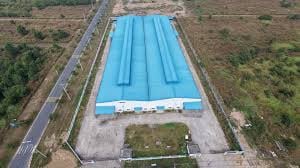
GIANG DIEN INDUSTRIAL PARK
Province
Dong Nai
Occupancy Rate
70%
Area
529.2 hectares
Lease Price
Contact
Details
Industrial Park Name | Giang Dien Industrial Park |
Location | Giang Dien and An Vien communes in Trang Bom district, and Tam Phuoc commune in Bien Hoa city, Dong Nai province. |
Total Area | 529,2 hectares |
Occupancy Rate | 70% |
Infrastructure Information
Electrical System | 110/22kV |
Water System | 5,000 m3/day |
Sewage System | 3,000 m3/day |
1. Project overview and legal information
Giang Dien Industrial Park is located in Trang Bom and Long Thanh districts, Dong Nai province, and was established according to Decision No. 2801/QD-UBND issued by the People’s Committee of Dong Nai province on August 27, 2008.
General information about Giang Dien Industrial Park:
- Name: Giang Dien Industrial Park
- Location: Giang Dien and An Vien communes (Trang Bom district) and Tam Phuoc commune (Bien Hoa city), Dong Nai province
- Area: 529.2 hectares
- Operating period: 50 years (2008 – 2058)
- Occupancy rate: 70%
Investment sectors targeted:
The industrial park is oriented towards developing fields such as high-tech product manufacturing; electrical wire and cable production; mechanical engineering; office equipment; medical, sports, and children’s toy equipment; high-end furniture and wood products; plastics, rubber, and glass industries; Pharmaceuticals, agricultural chemicals…
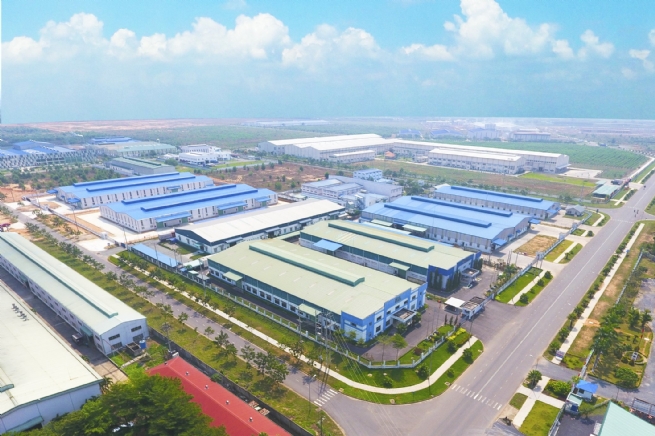
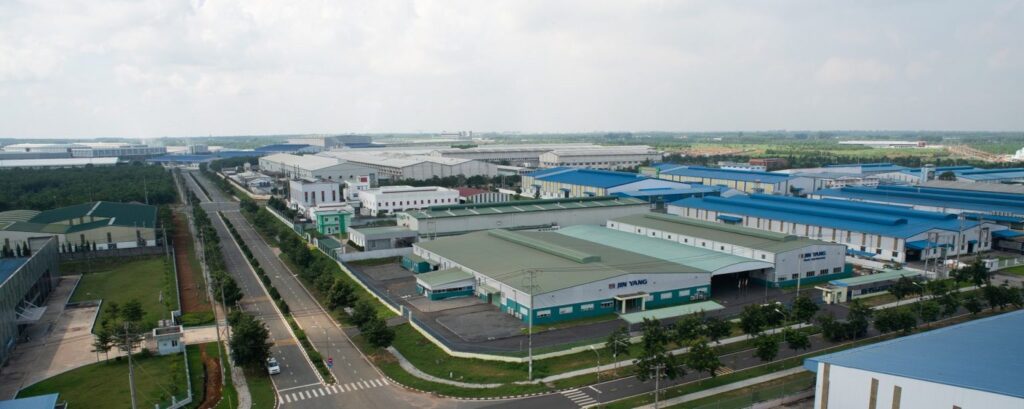
Giang Dien Industrial Park is one of three industrial parks in Dong Nai province planned for supporting industrial projects, prioritizing the attraction of industries using advanced, modern, and environmentally friendly technologies. To date, the industrial park has attracted approximately 30 investors, including 10 domestic enterprises and many enterprises from South Korea, Taiwan, Japan, etc., contributing to the promotion of local industrial development.
2. Investment costs and incentives
Infrastructure Management Fee: US$0.75/m²/year
Clean Water Price: VND 11,500/m³, subject to adjustment according to the water price regulations of the Dong Nai Provincial People’s Committee at any given time.
Wastewater Treatment Fee: VND 7,270/m³ (excluding VAT), applicable to wastewater meeting acceptance standards. The fee may vary depending on the concentration of substances in the wastewater; the chargeable flow rate is equivalent to 80% of the water supply used.
(The above fees may be adjusted according to State regulations at any given time.)
Businesses investing in Giang Dien Industrial Park enjoy many attractive preferential policies, specifically as follows:
Corporate Income Tax (CIT):
- A preferential tax rate of 17% will be applied for 10 years from the first year of revenue generation for businesses operating within the industrial park.
- 100% tax exemption for the first two years and a 50% reduction for the following four years.
- For projects in priority sectors such as software production, high technology, research and development, or supporting industries:
- A 10% tax rate applies for 15 years.
- Tax exemption for the first four years and a 50% reduction for the following nine years.
The tax exemption and reduction period is calculated continuously from the first year of taxable income generation. If no taxable income is generated in the first three years, the preferential period will be calculated from the fourth year after the project begins generating revenue.
Import and Export Taxes:
- Import tax exemption for machinery, equipment, and specialized vehicles used to create fixed assets.
- Tax exemption for raw materials and supplies used in the production of export goods.
- Tax exemption for construction materials that cannot be produced domestically.
- Goods produced for export are subject to a 0% export tax rate.
Tax on Profit Repatriation:
- Businesses are exempt from tax on profit repatriation activities.
Value Added Tax (VAT):
- Applies to goods and services consumed domestically with tax rates of 0%, 5%, and 10%.
- A 0% tax rate applies to exported goods and certain services, including goods and services provided to industrial zones.
3. Geographical location of Giang Dien Industrial Park
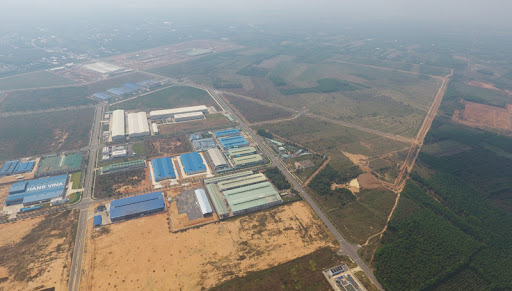
Giang Dien Industrial Park boasts a strategic location within the dynamic “economic quadrilateral” of Ho Chi Minh City, Binh Duong, Dong Nai, and Ba Ria – Vung Tau – a key area in the South, home to many of the country’s largest industrial parks.
Furthermore, the industrial park is situated in the heart of Dong Nai province’s rapidly developing industrial zone, near three densely populated areas: Bien Hoa City, Long Thanh District, and Trang Bom District. This provides convenient access to major transportation routes such as National Highway 1A, National Highway 51, Vo Nguyen Giap Road (Bien Hoa City bypass), and the Ho Chi Minh City – Long Thanh – Dau Giay Expressway.
Another significant advantage is its proximity to several major ports, including Bien Hoa ICD, Go Dau Port, Phuoc An Port, Tan Cang Cat Lai Port, and Phu My Port, optimizing logistics and import/export operations.
Distance to residential areas and urban centers:
- Approximately 1 km from Giang Dien Waterfall residential and tourist area
- Approximately 20 km from Bien Hoa City center
- Approximately 44 km from Ho Chi Minh City center
Distance to major transportation routes:
- Approximately 4 km north of National Highway 1A
- Approximately 9 km west of National Highway 51
- Approximately 1 km from the Ho Chi Minh City Expressway Ho Chi Minh City – Long Thanh – Dau Giay: Approximately 20 km
- Approximately 3 km from the North-South railway line
Distance to seaports:
- Approximately 43 km from Cat Lai Port (Ho Chi Minh City)
- Approximately 56 km from VICT Port (District 4, Ho Chi Minh City)
- Approximately 36 km from Go Dau Port
- Approximately 47 km from Phu My Port (Ba Ria – Vung Tau)
- Approximately 51 km from SP-PSA and SITV port cluster
- Approximately 58 km from Cai Mep Port (Ba Ria – Vung Tau)
Distance to airports:
- Approximately 49 km from Tan Son Nhat International Airport
- Approximately 22 km from Long Thanh International Airport
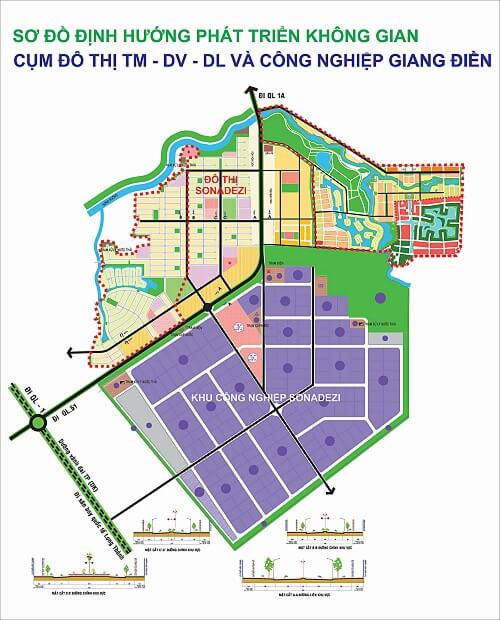
Map of Giang Dien Industrial Park
4. Infrastructure System

Map of Giang Dien Industrial Park
Giang Dien Industrial Park has a stable geological foundation with a bearing capacity of approximately 2.5 kg/cm², suitable for the construction of large-scale factories. The infrastructure system is planned to be modern, synchronized, and highly interconnected. Furthermore, to facilitate investors, the industrial park is clearly divided into functional zones, including areas for small and medium-sized enterprises, areas for enterprises of the same nationality, and areas for large corporations and enterprises.

Internal traffic within Giang Dien Industrial Park
- Power supply system: Electricity is supplied from the national grid through the Song May step-down substation and the 110/22kV transformer substation system, ensuring stable supply for production activities.
- Water supply system: Water supply capacity reaches 15,000 m³/day (phase 1 is 5,000 m³/day), supplied from Thien Tan Water Treatment Plant operated by Dong Nai Water Supply Joint Stock Company.
- Wastewater treatment system: The centralized wastewater treatment plant has a maximum capacity of 12,000 m³/day (phase 1 reaches 3,000 m³/day), ensuring that treated water meets QCVN 24:2009/BTNMT standards before being discharged into the environment.

- Communication System: Fully supports telecommunication services such as international direct dialing (IDD), fax, ADSL internet, VoIP, etc., meeting the communication needs of businesses.
- Other Technical Infrastructure: Internal transportation systems, rainwater drainage, green spaces, lighting, and fire protection are fully invested in, extending to each leased plot.
- Service Amenities: The industrial park provides a variety of amenities such as warehouses, logistics services, restaurants, convenience stores, cafes, banks, customs services, post office, and office space for rent… comprehensively serving the operations of businesses and the living needs of workers.
