1. Project overview and legal information
The Song Cau Industrial Park, located in the mountainous district of Khanh Vinh, Khanh Hoa province, was established by Decision No. 1601 dated June 19, 2015, of the Provincial People’s Committee. The project covers a total area of 40.36 hectares, of which approximately 27.9 hectares are designated for industrial land lease, with a total investment of over 350 billion VND.
Overview of Song Cau Industrial Park:
- Project Name: Song Cau Industrial Park
- Location: Song Cau Commune, Khanh Vinh District, Khanh Hoa Province
- Area: 40.36 hectares
- Operating Period: 50 years (2015 – 2065)
- Occupancy Rate: Approximately 65%
Investment Sectors Attracted: Handicrafts; agricultural and forestry product processing; wood processing; ice production; food processing (excluding fresh seafood); garment manufacturing; mechanical engineering…
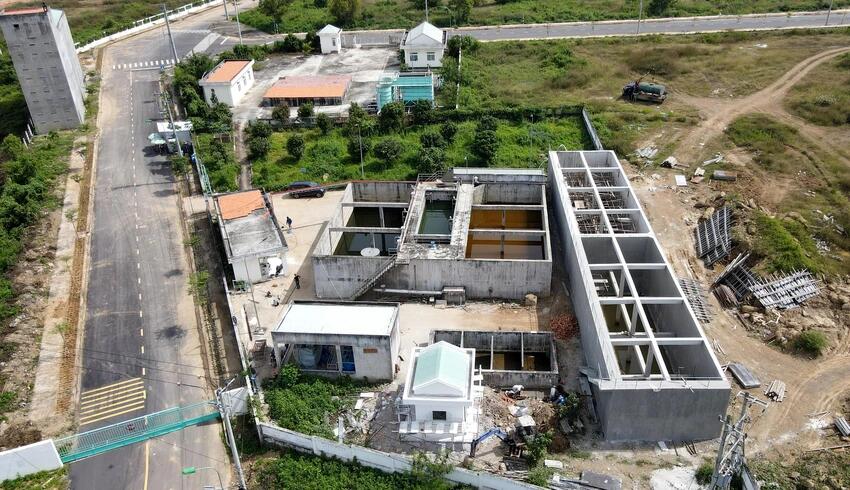
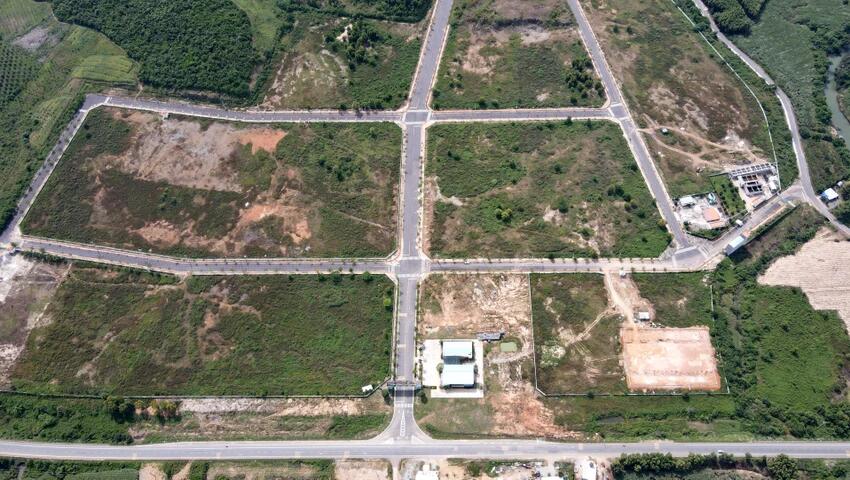
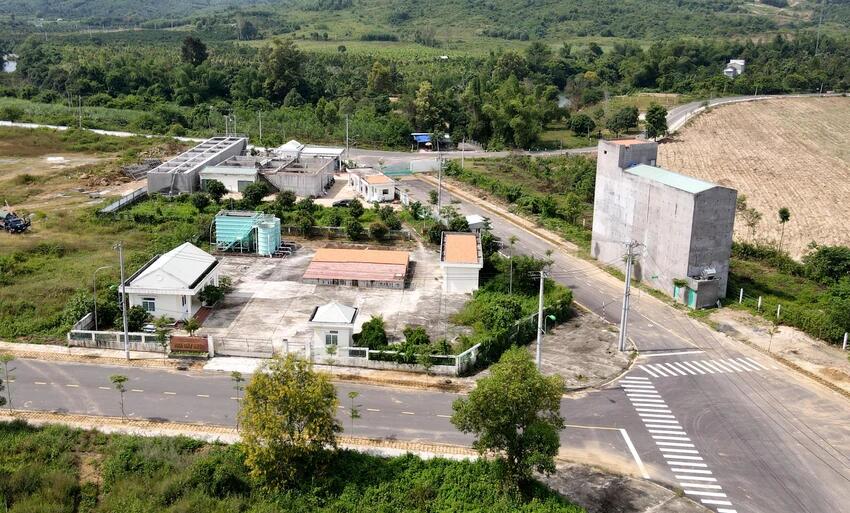
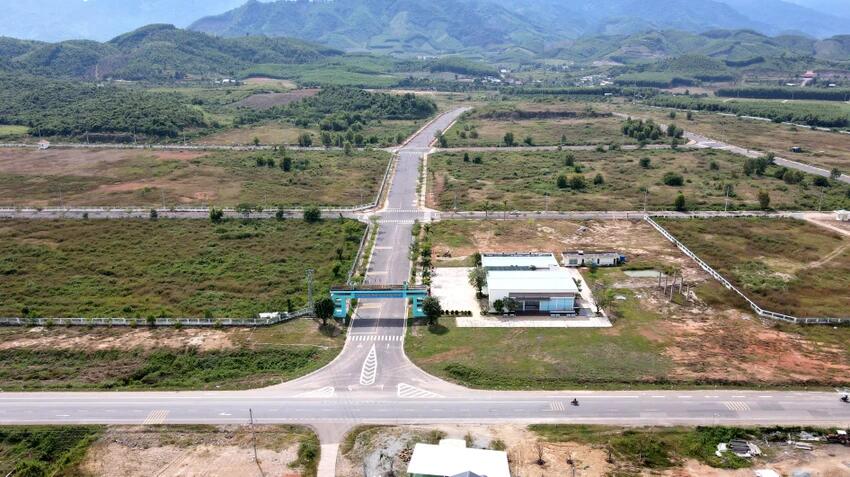
Perspective view of the Song Cau Industrial Park project.
With its advantages of a comprehensively invested, modern, and environmentally friendly infrastructure, along with a stable security environment, attractive incentive policies, and an abundant local workforce, the Song Cau Industrial Cluster is considered a potential investment destination for secondary businesses.
Currently, the industrial cluster is actively attracting new projects, thereby creating momentum to boost economic growth, providing employment for thousands of local workers, and contributing to improving the lives of the people and promoting the socio-economic development of Khanh Vinh district.
2. Chi phí và ưu đãi đầu tư
- Land lease prices for completed infrastructure: Depending on location and area size, the average price ranges from approximately 9 to 11 billion VND/hectare, suitable for small and medium-sized enterprises. In addition, the investor of the Song Cau Industrial Cluster also provides support to enable businesses to conveniently manage their operations remotely.
- Electricity prices: Applied according to the regulations of Khanh Hoa Provincial Electricity Company at the time of use.
- Telecommunications and waste disposal costs: Based on the unit prices of the service providers.
- Management fees, clean water prices, and wastewater treatment fees: Determined flexibly, depending on the leased area, production sector, and project implementation progress of each enterprise.
The Song Cau Industrial Park is located in an area with challenging socio-economic conditions. Therefore, investors leasing land to build factories here will benefit from many preferential tax policies similar to those in economic zones, specifically:
Tax Incentives:
- Preferential tax rate of 17% for the first 10 years;
- Tax exemption for the first 4 years and a 50% reduction in tax payable for the following 9 years.
Incentives from the Investor:
- 5% discount on the contract value for investors paying in full;
- Free management, operation, and infrastructure maintenance for 36 months from the date of land handover;
- In case of payment according to schedule, free management and maintenance for 24 months.
Discounts based on leased area:
- From 2 hectares to less than 3 hectares: 2% discount on the contract value;
- From 3 hectares to less than 4 hectares: 3% discount;
- From 4 ha to less than 5 ha: a 4% reduction;
- From 5 ha or more: a 5% reduction.
Support from Khanh Hoa Province:
According to Resolution No. 16/2020/NQ-HĐND dated December 7, 2020, small and medium-sized enterprises (SMEs) leasing land in industrial clusters will receive support from the provincial budget as follows:
- 50% support for land lease costs (calculated based on the unit price/m²/year);
- Maximum supported area: 10,000 m²;
- Maximum support amount: 100 million VND/enterprise/year;
- Support period: 5 years from the date of signing the lease contract (applicable during the period 2021–2025).
3. Geographical location of Song Cau Industrial Park
The Song Cau Industrial Cluster is located on National Highway 27C – a crucial transportation artery connecting Nha Trang (Khanh Hoa) with Da Lat (Lam Dong), considered the backbone linking these two major tourist centers of the country. Thanks to this, the area enjoys convenient transportation, easily connecting with Dien Khanh District, Nha Trang City, and surrounding areas. Its proximity to major transportation hubs facilitates the transportation of raw materials and the circulation of goods for businesses within the industrial cluster, while also providing access to abundant raw materials and labor.
Specific regional connections:
- Khanh Vinh Town (approximately 4 km away): Has about 19,525 people of working age; mineral resources include tin, kaolin, and large timber reserves.
- Dien Khanh District (approximately 12 km away): Located near the Nha Trang – Phan Thiet expressway currently under construction; It has a mineral water source with a flow rate of approximately 40 l/s, with a potential extraction of 3,400 – 3,500 m³/day.
- Nha Trang City (approximately 29 km away): Connected via the Vo Nguyen Giap – Da Lat route; has a highly skilled workforce with over 20,500 people holding college and university degrees and over 200 people with postgraduate degrees.
- Cam Ranh City (approximately 52 km away): Has large reserves of white sand for glass and crystal production; owns Cam Ranh International Airport, Cam Ranh International Port, and Ba Ngòi Port which are currently undergoing expansion.
- Ninh Hoa Town (approximately 55 km away): Has a skilled workforce, clay and limestone resources for construction materials production; large forest area for processing industries.
- Lam Dong Province (approximately 106 km away): Strong development of high-tech agriculture, industrial crops, medicinal plants, and flowers; It has many valuable mineral resources.
- Dak Lak Province (approximately 177 km away): Rich in mineral resources and key industrial crops such as coffee, rubber, tea, and pepper.
4. Infrastructure System
Currently, the infrastructure of the Song Cau Industrial Cluster has been largely completed, meeting the standards of TCVN 4514:2012 and QCVN 07-4:2016/BXD, ensuring it adequately serves the needs of secondary investors.
The investor aims to develop the industrial cluster according to environmentally friendly criteria, with approximately 1.5 hectares dedicated to green spaces and landscaping. The remaining area is allocated to integrated facilities such as water supply systems, wastewater treatment, power stations, internal transportation, and a central warehouse area.
- Internal transportation:
The road system is divided into main axes and branch routes, scientifically designed to facilitate easy access to each plot of land.
- Electrical System:
A stable power supply is provided from a 110/22 kV substation, with the power grid distributed along internal roads. Businesses can proactively invest in substations according to their needs. The production power grid is overhead, while the lighting system is underground. - Water Supply System:
The clean water plant, built by the investor, meets domestic water standards, with an initial capacity of 700 m³/day, sufficient to meet the needs of the entire enterprise. The water supply system is connected to the boundary of each land plot, using a closed-loop network with pipes ranging in diameter from 200–450 mm, along with booster pumps and storage tanks. - Wastewater Treatment System:
Industrial and domestic wastewater is pre-treated at each plant before being discharged into the common system, ensuring it meets at least standard column B (QCVN 40:2011/BTNMT). The centralized wastewater treatment plant has a capacity of 1,500 m³/day, meeting the needs of the entire industrial cluster.
Telecommunications System:
The telecommunications infrastructure meets international standards, providing approximately 24–48 lines per hectare. Underground fiber optic cables are directly connected to each enterprise.
Fire Protection System:
Designed according to national standards, with fire hydrants located along the roads, with a maximum distance of 150 meters between hydrants.
- Other Amenities:
A complete lighting system is installed along the roads. In addition, Agribank plans to open a branch office within the industrial cluster.
According to the plan, approximately 28 hectares of land are divided into 27 plots for factory construction, along with amenities such as gas stations, warehouses, a centralized wastewater treatment plant, canteens, meeting halls, and administrative offices, creating favorable conditions for production and business operations.