
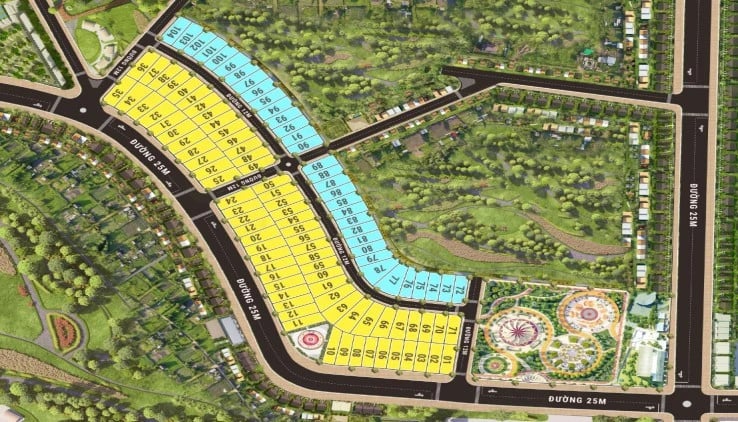
NAM PLEIKU INDUSTRIAL PARK
Province
Gia Lai
Occupancy Rate
70%
Area
199.55 hectares
Lease Price
0 USD/m2

Details
Industrial Park Name | Nam Pleiku Industrial Park – Gia Lai |
Location | Ia Tiêm commune (Chư Sê district) and La Băng commune (Chư Prông district), Gia Lai province |
Total Area | 199.55 hectares |
Land Rental Price | 60 USD/m2 |
Construction Density | 40% |
Occupancy Rate | 70% |
Infrastructure Information
Electrical System | 110/35/22KV |
Water System | Clean water is supplied at a capacity of 30,000 m3 per day from the water treatment plant. Water is supplied to the plant’s perimeter via an international standard water supply pipeline system. |
Sewage System | 2,900 m3/day – night |
Traffic System | The main roads within the industrial park are 32 meters wide – 4 lanes. The branch roads within the industrial park are 23 meters wide – 2 lanes. All internal roads are designed and constructed in strict compliance with national regulations and are finished with asphalt concrete. The internal roads are also equipped with a complete and aesthetically pleasing high-pressure lighting system. |
1. Project overview and legal information
The Nam Pleiku Industrial Park was established in September 2019, and the infrastructure construction and operation project commenced at the end of 2019. The project is invested by Chu Se Rubber Company Limited, with a scale of nearly 200 hectares, of which 136.07 hectares are allocated for business operations and the total investment capital is over 517 billion VND.
Below is an overview of the Nam Pleiku Industrial Park:
- Name: Nam Pleiku Industrial Park – Gia Lai
- Location: Located in Ia Tiem commune (Chu Se district) and La Bang commune (Chu Prong district), Gia Lai province
- Operating period: 50 years (2019 – 2069)
- Total area: 191.55 hectares
Investment attraction sectors:
The industrial park is oriented towards multi-sector development, including: mechanical assembly; Manufacturing of electronic components and parts; consumer goods; handicrafts; textile industry; food and agricultural product processing; and other industries in line with the local development orientation.

Nam Pleiku Industrial Park – Gia Lai
2. Land lease costs and incentives
3. Geographical location of the South Pleiku Industrial Park
The Nam Pleiku Industrial Park project (Gia Lai) boasts a strategically important location, situated directly on National Highway 14 (Ho Chi Minh Highway) – a vital transportation artery running throughout the Central Highlands region. Simultaneously, the industrial park is conveniently connected to National Highway 19, creating a link between the Central Highlands provinces, Cambodia, and the Central Coast region. Furthermore, this location is close to international border crossings such as Le Thanh (Gia Lai) and Bo Y (Kon Tum), facilitating trade with Laos and Cambodia.
Distance to key areas:
- Approximately 18 km from Pleiku city center
- Approximately 23 km from Pleiku Airport
- Approximately 65 km from Kon Tum city
- Approximately 160 km from Buon Ma Thuot city
- Approximately 170 km from Quy Nhon port

4. Infrastructure System
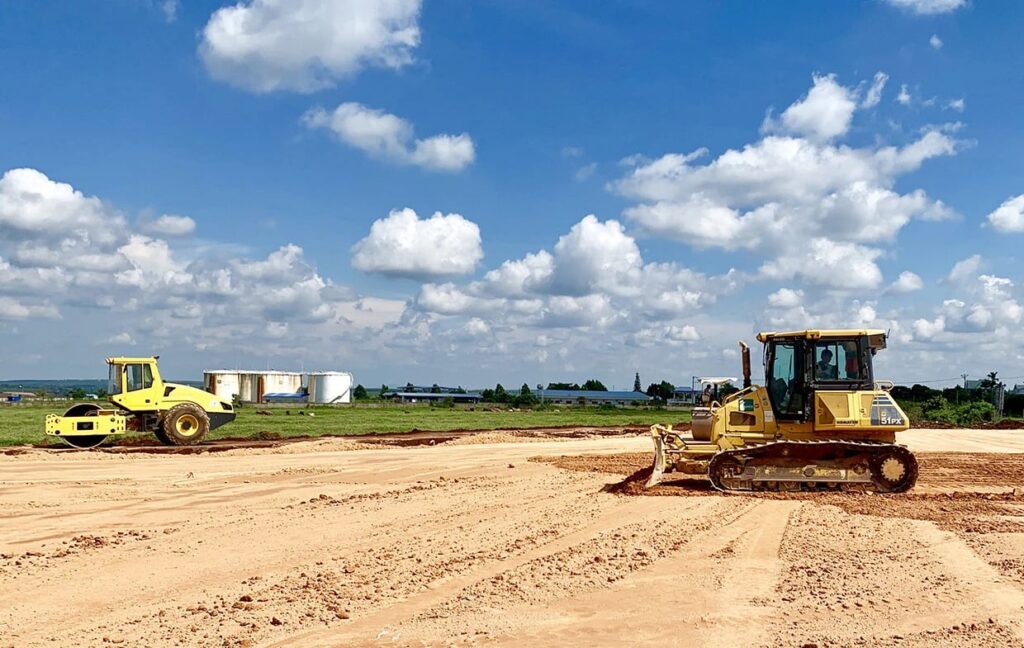
Infrastructure of Nam Pleiku Industrial Park – Gia Lai
Landscape and Environment:
Approximately 12% of the entire industrial park area is dedicated to green spaces, arranged along roads and in various other areas. Lawns and public green spaces are invested in to improve the working environment. All factory or construction projects within the park must be approved by the Management Board.
Land Conditions:
The land has been leveled to an average elevation of approximately 9m, with a hard soil foundation, favorable for construction and reducing investment costs.
Internal Transportation System:
The transportation network is scientifically planned, ensuring convenient traffic flow throughout the park:
- Main arterial road is 32m wide with 4 lanes.
- Branch roads are 23m wide with 2 lanes.
All internal roads are constructed with asphalt concrete according to national standards, accompanied by a modern lighting system, ensuring safety and aesthetics.
Electrical System:
Electricity is supplied from a 110/35/22kV substation, with a high-voltage power grid arranged along internal roads, ensuring a stable power supply for businesses.
Water Supply System:
Clean water is supplied from the plant with a capacity of approximately 30,000 m³/day, piped directly to the factory boundaries through a system of pipelines meeting international standards.
Wastewater and Waste Treatment System:
Wastewater is collected and treated at a centralized plant, meeting Class A standards according to QCVN 40:2011/BTNMT before being discharged into the environment. The treatment capacity is approximately 2,900 m³/day.
Solid waste is sorted, collected, and transported by specialized units to minimize pollution. Factory emissions are also treated through a filtration system meeting standards before being released into the environment.
Communication System:
The telecommunications infrastructure is installed using underground cables, connecting directly to each business. The system fully meets needs such as internal telephone systems, international calls, online conferencing, dedicated lines, high-speed internet, and other communication services.
Fire Protection System:
The fire protection system is implemented synchronously, strictly complying with national regulations. Fire hydrants are located at traffic intersections and factory areas to ensure timely response to incidents.
Financial Services:
Many major banks such as VietinBank, Vietcombank, Sacombank, Agribank, BIDV, Techcombank, etc., are present around the industrial park, facilitating financial transactions for businesses.
5. Human resources in the South Pleiku Industrial Park
Gia Lai province has a population of approximately 2.211 million people, with a large proportion of young people under 15 years old, accounting for about 37.6%. Meanwhile, the elderly population (men over 60, women over 55) only accounts for about 7.1%. In mountainous districts, the proportion of the population under working age is even higher, reaching up to 45% in some areas.
Another noteworthy point is the slight gender imbalance in Gia Lai, with men accounting for about 50.9%, higher than women (49.1%), contrary to the general trend nationwide. In some areas with specific industrial activities such as mining, this ratio is even more skewed towards men, for example in Cam Pha with about 53.2% men and 46.8% women.