Value Chain Map of Vietnam's Electrical and Electronics Industry: A New Boost for Korean Investment in Vietnam
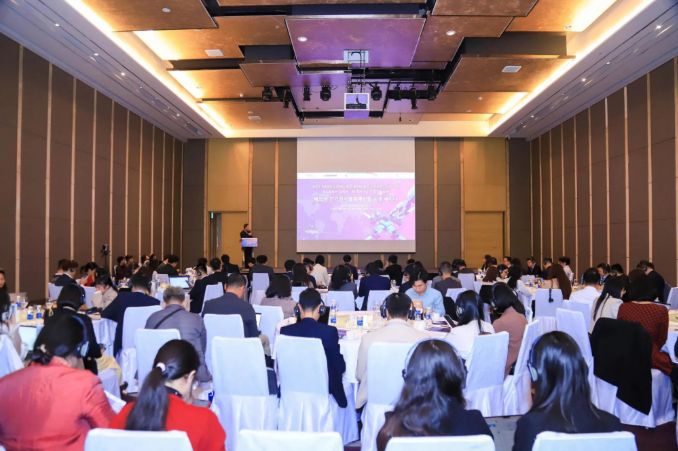
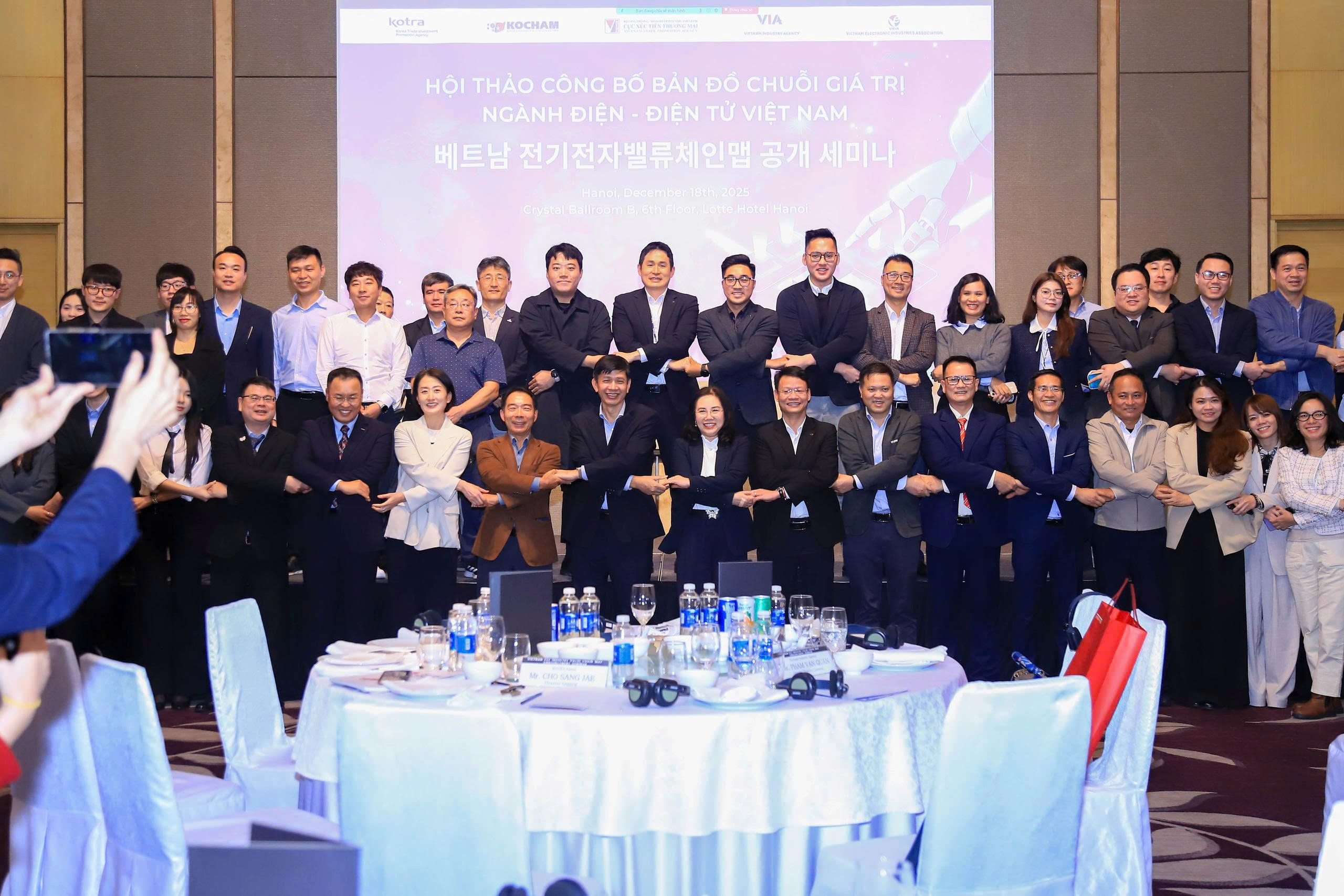
HANOI – On December 18 in Hanoi, the Vietnam Trade Promotion Agency (VIETRADE) and the Korea Trade-Investment Promotion Agency (KOTRA) officially launched the “Vietnam Electronics Value Chain Map” and the “Business Directory.”
Electronics: The Backbone of Vietnam’s Exports
Speaking at the event, Bui Quang Hung, Deputy Director of VIETRADE, emphasized that the electrical and electronics (E&E) sector has emerged as the primary growth engine for the Vietnamese economy over the past decade. Vietnam has successfully transitioned from a basic assembly hub into a strategic link in the global supply chain, attracting major players such as Samsung, LG, and Intel.
According to Vietnam Customs, the industry’s export turnover reached $126.5 billion in 2024. In the first 11 months of 2025, exports hit approximately $143 billion, accounting for one-third of the nation’s total export value. Vietnam now ranks among the world’s top 10 electronics exporters and serves as a strategic production base for numerous multinational corporations.
Despite these achievements, the industry faces significant bottlenecks, including fragmented supply chains and a substantial “information gap” between local firms and foreign direct investment (FDI) sectors. Many foreign small and medium-sized enterprises (SMEs) remain hesitant to invest due to a lack of comprehensive data regarding R&D, components, and logistics.
A Strategic Step Toward Industry Data Systematization
To address these challenges and attract a “second wave” of foreign SME investment, VIETRADE and KOTRA developed the Value Chain Map following an in-depth analysis of the E&E sector.
The 913-page document provides a detailed overview of 742 active enterprises across seven key electronics sub-sectors. Designed to be highly visual and data-driven, the map acts as a digital infrastructure that allows stakeholders to assess the production capacity and specific positioning of businesses within the global value chain.
Mr. Hung noted that this initiative is crucial as regional competitors like Thailand, Malaysia, and Indonesia are also investing heavily in similar mapping systems to attract FDI. For Vietnam, building this map is more than a technical solution; it is a vital step toward long-term development and industrial self-reliance.
Bok Dug Gyou, Head of the Korea Desk at VIETRADE, added that investment from foreign SMEs based on this data will lead to stronger technology transfer, ultimately accelerating the localization process for Vietnamese firms.
Enhancing Transparency and FDI Connectivity
The map’s primary benefit is supply chain transparency. For the first time, foreign investors can clearly identify which local firms produce specific components and evaluate their actual capacity. This narrows the information gap that often hinders FDI entry. It also helps authorities pinpoint “missing links” in the chain to better target future trade and investment promotion efforts.
For Korean partners, the map opens significant opportunities for investment expansion. As Vietnamese companies are officially positioned by their capabilities, their chances of joining global supply networks increase. This not only helps investors find optimal locations within industrial parks but also fast-tracks technology autonomy for local partners.
Realizing the Miracle on the Red River with the compass “Value Chain Map”
The Value Chain Map is expected to create a positive ripple effect across the entire manufacturing ecosystem. By visualizing and digitizing industry data, authorities can make more informed, science-based decisions on which types of businesses to attract to maximize global competitiveness. VIETRADE committed to integrating this dataset into upcoming trade fairs and business matching programs.
From a consulting perspective, AVA Consulting views this as a “golden window” for investors to redefine their strategies in Vietnam. While industry leaders like Japan and South Korea took decades to dominate the electronics sector, VIETRADE believes that with accurate diagnostics and effective policies, Vietnam can soon realize its own “Red River Miracle.” This strategic information infrastructure is the first step toward Vietnam becoming a new-generation industrial power.