
Two Giants LG and Honda to Install 1,000 Battery Swapping Stations in Hanoi: Continuing to Break the EV Infrastructure Monopoly
Following the partnership between Selex Motors and Petrolimex to build a shared battery swapping network in Vietnam, the electric vehicle (EV) market has witnessed another notable alliance: LG Energy Solution and Honda Motor.
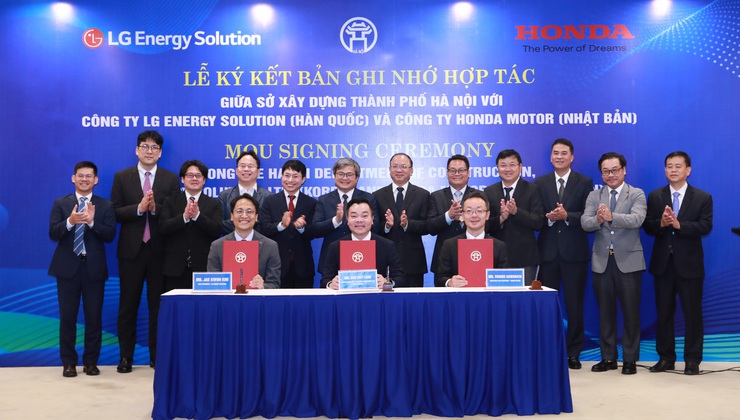
On the morning of May 19, the Hanoi Department of Construction signed a Memorandum of Understanding (MoU) with South Korea’s LG Energy Solution and Japan’s Honda Motor for a project to install electric motorcycle battery swapping stations in Hanoi.
Under the plan, the initial phase starting from Q3/2026 will deploy around 50 battery swapping stations in the downtown area, prioritizing the Hoan Kiem district, which is slated to become the city’s first low-emission zone. Following this pilot phase, the network is expected to expand to approximately 1,000 swapping points across Hanoi starting in Q3/2027.
The most noteworthy aspect lies in the operational model: the system is designed as an open platform, allowing multiple EV manufacturers to utilize it, including Vietnamese enterprises.
If successful, this could become one of the first major efforts to build a shared energy infrastructure for electric motorcycles in Vietnam—a sector that is currently highly fragmented among different brands.
Unlike traditional charging which takes hours, the battery swapping model allows users to replace an empty battery with a fully charged one in just a few minutes. This is a significant advantage for high-intensity riders such as delivery couriers, ride-hailing drivers, and transport services, who are also the primary target group for LG and Honda in the initial phase.
In reality, one of the biggest hurdles for electric motorcycles today is not just the vehicle price, but also the charging time and refueling infrastructure. In Hanoi, the pressure to transition to green transportation is mounting as the city accommodates around 8 million road vehicles. Against the backdrop of the upcoming low-emission zone enforcement around Ring Road 1 starting July 1, the demand for EV infrastructure has become more urgent than ever.
According to leaders of the Hanoi Department of Construction, high battery costs coupled with the lack of a synchronized charging system pose major obstacles to the electrification of transportation. Therefore, the public battery swapping model is expected to address multiple challenges simultaneously: refueling speed, optimizing ownership costs, and reducing the financial burden of battery investment for users.
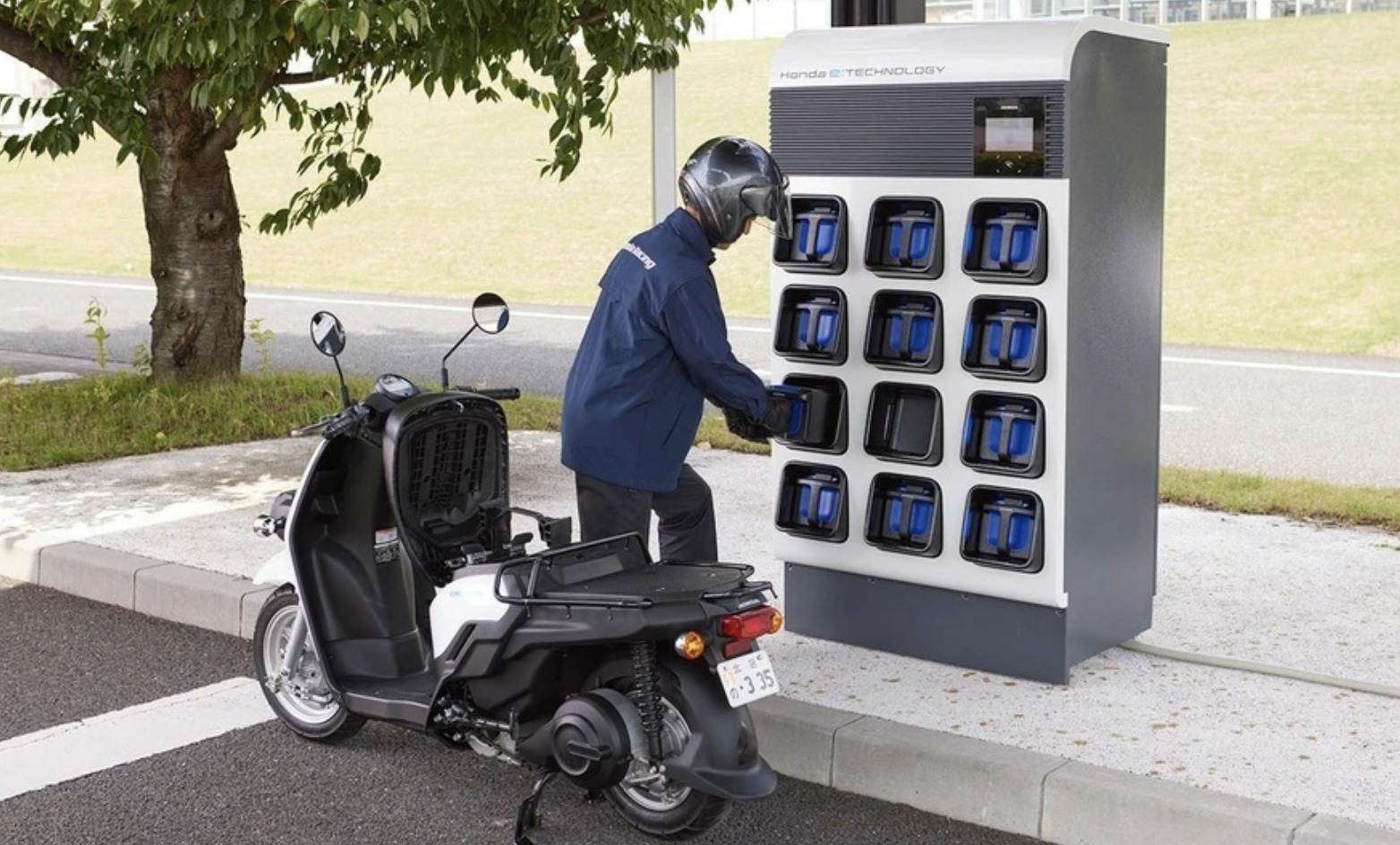
Currently, the Vietnamese EV market operates predominantly on a closed ecosystem model. Manufacturers usually build their own charging or battery swapping infrastructure, covering unique battery standards, technology, and station networks. While this allows companies to control the user experience, it creates a reality where consumers are effectively “locked into” a specific brand’s ecosystem.
In the electric car segment, VinFast owns the largest charging network in Vietnam, boasting tens of thousands of charging ports nationwide, which primarily serve VinFast vehicles. In the electric motorcycle segment, players like Selex Motors have opted for battery swapping but still have to build their own independent ecosystems. Consequently, LG and Honda’s announcement of an open battery swapping model is considered a significantly distinct move.
If multiple brands share a single network, infrastructure investment costs can be divided, while users will no longer worry about the dilemma of “buying a vehicle only to struggle finding a charging spot.” This model has been pursued by several Asian countries to accelerate the adoption of two-wheeled electric vehicles.
However, for an open battery swapping network to operate efficiently, the toughest challenge lies in standardization. Each vehicle manufacturer currently uses different battery designs, voltages, and technical platforms. Without compatible battery standards, scaling a shared model is highly complex. This is also why many markets, despite experiencing strong EV growth, have yet to widely adopt battery swapping.
Speaking at the signing ceremony, leaders of the Hanoi People’s Committee emphasized that the swapping stations must be compatible with various vehicle models and integrated with battery collection and recycling solutions to ensure environmental safety.
This indicates that the project is not just about building more swapping stations; it is a test case for the feasibility of establishing an open infrastructure standard for EVs in Vietnam. If successful, the future of the EV industry may no longer be a race focused solely on the vehicles themselves, but a competition to dominate the energy platforms and the operational ecosystems supporting them.
Phan Trang
Cafebiz.vn